


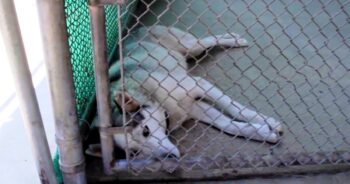
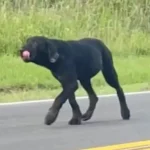
When shelter workers spotted a stunning purebred Husky wandering the streets alone, they were immediately struck by his unusual demeanor. The dog, later named Nate, seemed lost not only physically, but emotionally. His posture was withdrawn, and his eyes reflected deep pain—a sign that his struggles went far beyond being abandoned.
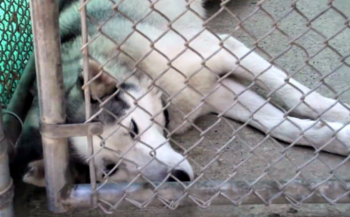
Initially, rescuers thought Nate was another unfortunate case of abuse or neglect. It wasn’t uncommon for dogs to arrive frightened or traumatized at the shelter. However, Nate’s behavior was markedly distinct. He avoided eye contact, flinched at every movement, and stayed huddled in a corner of his kennel, unwilling to interact with anyone. Something was clearly different about this dog.
During the standard intake process, workers scanned Nate for a microchip—hoping it would lead to an owner. Instead, the results stunned them. Nate wasn’t registered to a pet parent or breeder. According to the chip, he was owned by a laboratory.
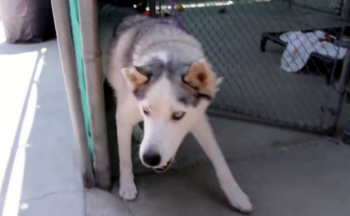
The horrifying truth came to light: Nate had been used for laboratory testing. For months, he had endured experimental procedures, living in cold metal cages with little compassion. His psychological scars spoke volumes—he was a victim of cruelty disguised as science.
What made matters worse was the way the laboratory disposed of Nate. Once deemed unfit for further testing due to his fragile mental state, he was dumped on the streets like trash—abandoned and left to fend for himself in a world he hardly understood. He had never experienced kindness, love, or even the basic joys of being a dog.
Moved by Nate’s condition and haunted backstory, the shelter staff contacted Beagle Freedom Project—a nonprofit that specializes in rehabilitating animals rescued from lab testing. They promptly stepped in to assist and connect Nate with a foster home that could handle his specific needs.
Nate’s healing journey began in the hands of a compassionate foster mom. With patience, love, and dedication, she developed a tailored rehabilitation plan for the traumatized dog:
- Gentle socialization exercises to slowly reintroduce Nate to the idea of being around humans.
- Desensitization techniques for handling and grooming, since Nate flinched at every touch.
- Positive reinforcement training to help him learn trust and develop confidence.
- Quiet, secure environment where he could feel safe exploring at his own pace.
Progress was slow, but steady. Days turned into weeks, and weeks into months. Eventually, Nate began to respond—his haunted eyes started to soften, his tail wagged timidly, and most remarkably, he smiled.
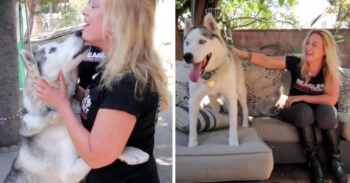
This once-frightened and emotionally shattered Husky had found a new purpose in life. He’d learned what love felt like, how warm hands could be gentle instead of cruel, and that he no longer had to live in fear.
His foster mom called him a “special warrior”—not because of what he had suffered, but because of the strength he displayed in overcoming unfathomable trauma. Nate’s story is more than a tale of rescue; it serves as a powerful reminder of the hidden victims of animal testing and the capacity for healing with the right support.
Watch Nate’s incredible transformation captured on video below:
Each year, thousands of animals like Nate are tested, mistreated, and dumped when they’re no longer “useful.” Their cries often go unheard, masked behind sterile lab walls. But with awareness, advocacy, and kindness, we can help rewrite the stories of animals like Nate—giving them a second chance, and ultimately, a voice.


Facebook Comments