
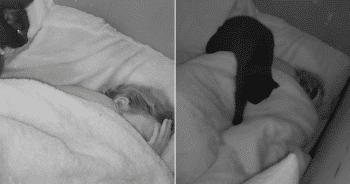

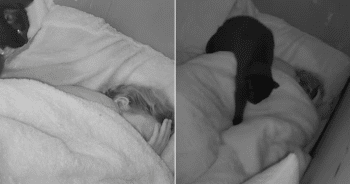
When Issy faced an unexpected medical challenge in late 2024, she never imagined her rescue cat Bobby would rise to become her steadfast guardian. After her first seizure in November of that year, Issy began navigating a world filled with uncertainty. Seizures disrupted her daily life and created emotional isolation, but everything changed when she noticed her cat responding with concern moments before an episode.
Bobby, a cat Issy had originally fostered through Colorado Feline Foster Rescue, began responding to Issy in remarkably consistent ways. At first, it was a curious stare before a major seizure occurred. Then, more patterns emerged. Bobby began kneading her, meowing insistently, or curling up beside her – all seconds or minutes before a larger episode would begin.

These signs weren’t just comfort — they were warnings. Bobby appeared particularly responsive to Issy’s focal and tonic-clonic seizures, marked by body-wide stiffness, shaking, and occasional loss of consciousness. Despite no formal training, Bobby’s behaviors mirrored those of a skilled service animal, alerting Issy in moments when her symptoms remained subtle or unseen by others.

One night in particular touched viewers around the world. A video uploaded to Issy’s TikTok on October 18 shows Bobby stepping onto her bed and gently alerting her as a seizure began. He stayed by her side, laying close and gently kneading her as she slowly regained consciousness. When the episode ended, Bobby nestled behind her, keeping her safe throughout the night.

Emotionally, Bobby’s companionship became more than just calming—it became essential. The overwhelming sense of being alone with a seizure disorder began to shift. Bobby’s consistent awareness helped Issy feel seen and secured, even in the most vulnerable moments.
- No formal detection training: Bobby instinctively sensed changes in Issy’s behavior and health.
- Focused pre-seizure behavior: Alerting Issy through meowing, kneading, and unrelenting eye contact.
- Post-seizure support: Remaining close, monitoring her safety, even helping her stay in safe positions during recovery.

Experts have long debated whether cats can detect seizures with the same consistency as trained service dogs. While science is still exploring this field, some researchers believe that cats may sense subtle changes in a person’s behavior, scent, body chemistry, or movement hours or even minutes before a seizure occurs. Bobby, regardless of scientific certainty, has become a prime example of an animal displaying compassionate and alert behavior that changes a human’s quality of life.
For Issy, Bobby is not just a pet—he’s an instinctive medical ally and emotional anchor. The videos uploaded to her TikTok account have captured hearts across social media. One such clip, featuring Bobby in the moments leading to and after a seizure, has garnered over six million views and countless comments praising his quiet heroism.
@issybellyy cats cant become service animals because theyre ‘untrainable’. mr. bob never needed to be trained, he always tries his best to protect me
As she adjusts to the realities of living with seizures, Issy continues to lean on Bobby’s companionship. In a world that often sees cats as independent or aloof, Bobby defies expectations. His silent devotion and intuitive protection highlight the deep connection possible between humans and animals—a bond unspoken, but undeniably powerful.


Facebook Comments