

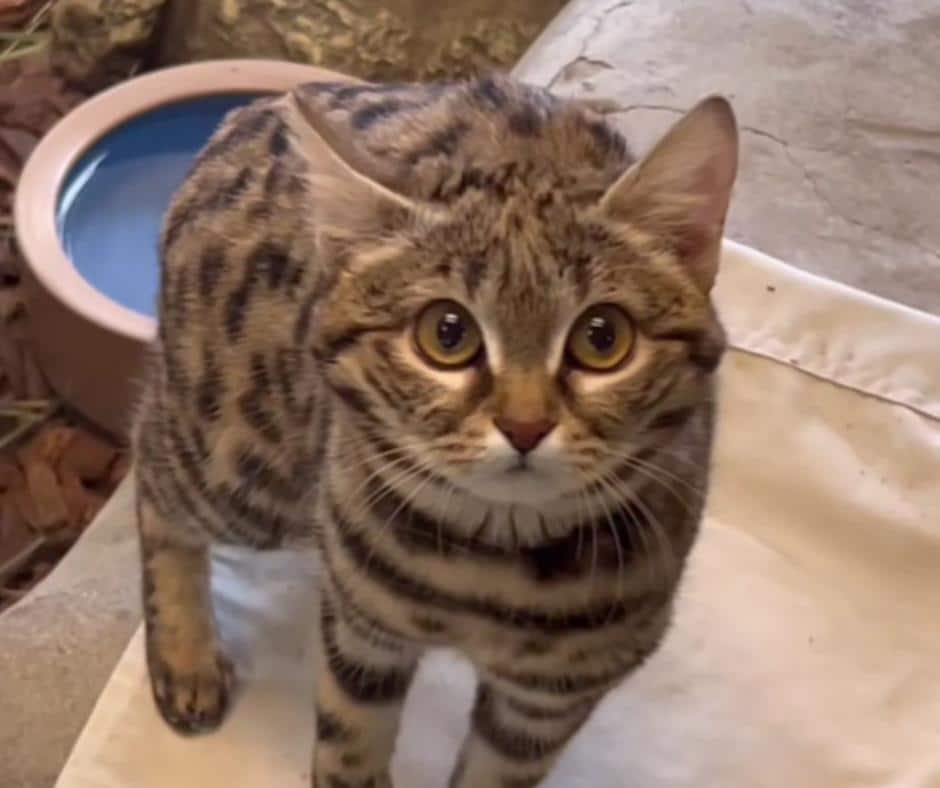
In a quiet corner of Utah’s Hogle Zoo, a pint-sized predator is making herself at home. Curled inside a soft basket, her oversized ears twitching with every sound, Gaia, an eight-month-old black-footed cat, looks more like a plush toy than the apex hunter she truly is. At just three pounds, Gaia may appear unassuming, but this small feline holds the title of the world’s deadliest wild cat, known not by the size of prey she takes down, but by her astonishing hunting success rate.
Gaia arrived at Hogle Zoo on December 28, entering the Small Animal Building with wide, curious eyes and a quiet confidence. Despite her minute frame, her presence is captivating. Nestled into a cozy resting spot, she calmly surveys her surroundings, exuding both tranquility and intensity—as if aware of her role not just in this enclosure, but in the broader mission of conservation.
This young black-footed cat is part of a specialized effort to help stabilize and support the species’ dwindling population. Gaia was placed at the zoo based on a breeding recommendation from the Black-Footed Cat Consortium, working under the guidance of the Association of Zoos and Aquariums. Her role transcends public fascination—she is part of an active program dedicated to ensuring genetic diversity and long-term survival for her species.
Native to the arid landscapes of South Africa, Namibia, and Botswana, black-footed cats thrive in isolation. Unlike typical zoo favorites, these cats are biologically wired for independence, stealth, and precision. Despite their small size, they boast a hunting success rate of 60 percent, outpacing lions and leopards. Their diet in the wild is as varied as it is surprising—ranging from mice to insects, and even small reptiles and spiders.
Despite her fierce reputation, Gaia’s appearance evokes affection rather than fear. Her tabby-patterned coat paired with rounded, expressive eyes offer a misleadingly domestic charm. But beneath that soft exterior is a feline built for survival. In the wild, black-footed cats can leap over five feet into the air and nearly seven feet in a single bound—critical skills for stalking prey across open landscapes.
According to recent data, fewer than 9,700 black-footed cats remain in the wild, and only 29 live under human care within the conservation consortium. The species is listed as vulnerable by the International Union for Conservation of Nature (IUCN), indicating it’s one step away from endangered status. Habitat loss and predation further threaten their survival.
- Species: Black-footed Cat (Felis nigripes)
- Age: 8 months
- Weight: Approximately 3 pounds
- Habitat: Southern African savannas and deserts
- Special Skills: Exceptional stealth, high vertical and horizontal leaping ability
- Conservation Status: Vulnerable (IUCN Red List)
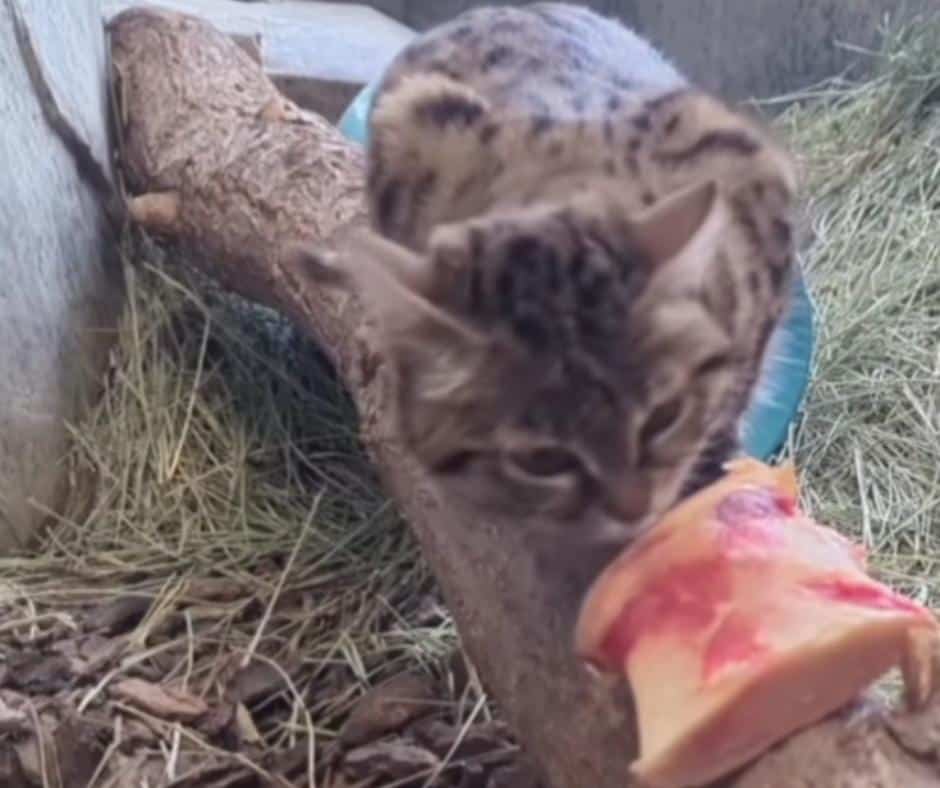
Gaia’s new habitat at Hogle Zoo has been specially designed to simulate her natural environment while offering room for exploration, rest, and observation. Videos shared by the zoo show her seated alertly in a padded bed, bright eyes watching every flicker of movement—from a keeper walking by to the rustle of bedding in the corner.
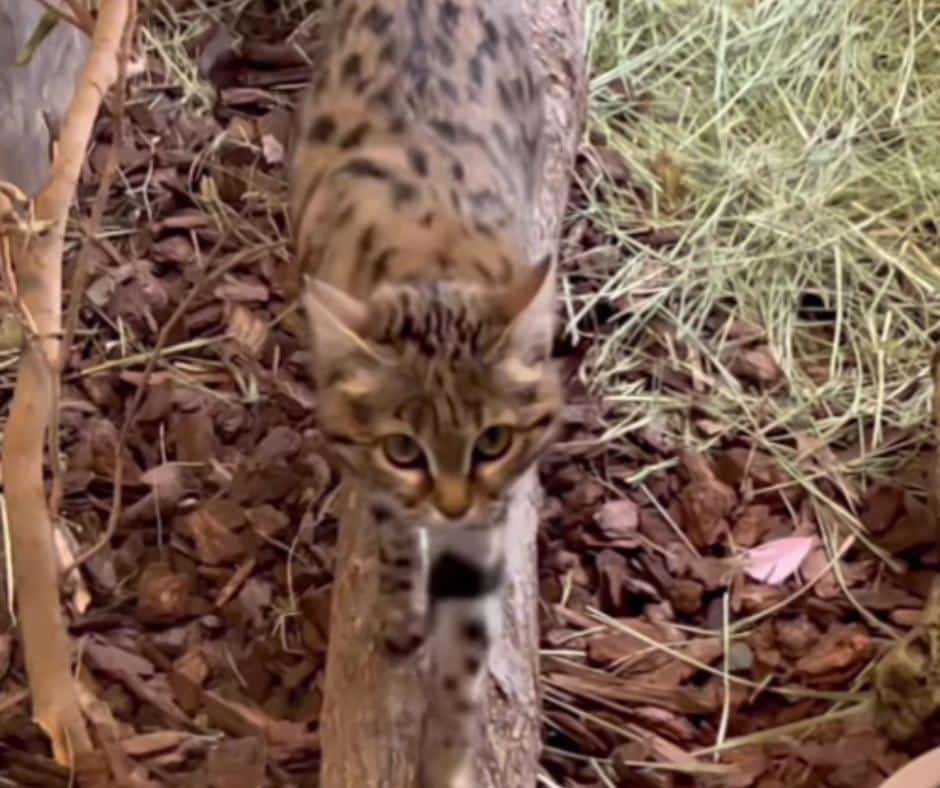
Her story has captivated social media, especially after Hogle Zoo shared a viral video of Gaia with fitting background music underscoring her fearsome reputation. Watch her here:
https://www.tiktok.com/@hoglezoo/video/7325133851808845098
While Gaia remains a solitary hunter by instinct, her impact extends far beyond the exhibit walls. With each moment of rest, every playful bound in her enclosure, she embodies the possibility of a brighter future for one of the planet’s most extraordinary and least understood feline species.
And so, in a world where appearances often deceive, Gaia reminds us that true power comes in unexpected packages—and in this case, dressed in fur and weighing just a few pounds.



Facebook Comments