


Helping Freezing Cats: Essential Steps from Cat Man Chris
As temperatures drop, outdoor cats face the harsh reality of surviving in freezing conditions. While some find refuge in warm garages or cozy shelters, others are left to fend for themselves against the cold, wind, and snow. Cat rescuer and animal advocate Cat Man Chris shares vital insights on what to do if one encounters a cat suffering from hypothermia.
Understanding the Dangers of Cold Weather for Cats
Cats, despite their fur coats, are not immune to dangerously cold temperatures. Prolonged exposure can lead to hypothermia, where the body loses heat faster than it can produce it, and essential functions like circulation and breathing begin to slow. Young kittens, senior cats, and underweight animals are particularly vulnerable.

Signs of hypothermia in cats include shivering, weakness, slow movement, and disorientation. In severe cases, the animal may stop shivering and become unresponsive. Immediate veterinary care is critical as hypothermia is a veterinary emergency with potential unseen complications.
Immediate Steps for Helping a Cat with Hypothermia
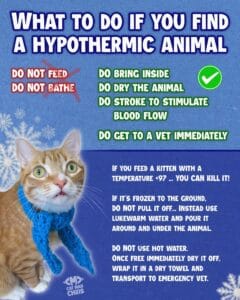
Firstly, if you find a cat in freezing conditions, move them to a warm, dry environment. Gently dry their fur with a towel and envelop them in a dry blanket to prevent further heat loss. If available, use a warm water bottle wrapped in a towel for gentle warmth, but never let it touch the cat’s skin directly.
Gradual warming is essential. Avoid intense heat sources like heating pads, hair dryers, or hot baths, which might cause burns or escalate complications. Handle the cat gently, using a secure carrier lined with towels for transport, and contact a veterinarian as soon as possible.
Avoid Feeding Cold Kittens
Feeding a kitten that is cold can be perilous. Very young kittens lack the ability to regulate their body temperature effectively, and digestion can slow with hypothermia, increasing the risk of regurgitation and aspiration. Instead, focus on warming the kitten with safe, moderate heat sources while seeking veterinary help.
Using a wrapped warm-water bottle or pet-safe warming devices and allowing the kitten to move away from the heat if needed is ideal. Understand that a temperature below 97 degrees Fahrenheit is concerning, and immediate action is necessary.
Addressing Cats Frozen to the Ground
In extreme winter weather, a cat might become frozen to the ground. Do not attempt to pull them free, as this could damage their skin and tissues. Always contact animal control or an experienced rescue organization. Applying small amounts of lukewarm water can help release the cat gently without force.
If this occurs, once the cat is free, dry the affected areas with a towel, wrap them warmly, and seek immediate veterinary care. Frostbite can also develop in freezing conditions, particularly on extremities like ears and tails, necessitating a thorough check by a veterinarian.
Preparing for Cold Weather Can Save Lives
Small actions can greatly enhance the safety and comfort of outdoor cats during cold months. Providing insulated shelters, ideally elevated and insulated with straw rather than fabric, can offer much-needed warmth. Regular checks around cars before starting engines can save cats seeking warmth from danger.
A little preparation and awareness can make a world of difference for these vulnerable animals. Ensuring not just shelter but also access to fresh water and food is vital for the wellbeing of community cats in winter.




Facebook Comments