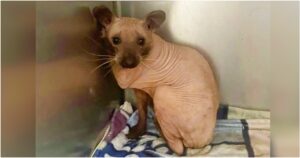

A Canadian couple recently experienced a surprising wildlife rescue when they encountered what they believed was a stray Sphynx cat in their backyard. Upon closer examination at a veterinary clinic, the “cat” was revealed to be a completely hairless raccoon—something so rare that it left even seasoned professionals shocked.
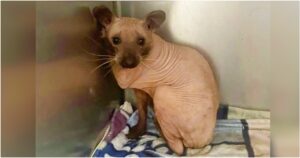
The raccoon, now named Rufus, was originally found shivering and frail in West Arichat, Nova Scotia. The three-kilogram creature was taken to a vet clinic in Cape Breton where she was given fluids and initial care. Recognizing the need for more specialized support, the veterinary team contacted Hope for Wildlife, a rehabilitation shelter located in Seaforth, Nova Scotia. The shelter welcomed Rufus with open arms.
According to CP24, the staff were initially astonished by Rufus’s condition. Completely hairless—even around her eyes—her appearance is due to a severe case of alopecia. Unlike other wild raccoons with patchy fur loss, Rufus lacks nearly all signs of the typical black facial markings or fur tufts.

Rufus gained her name from the hairless mole-rat sidekick in the children’s cartoon Kim Possible. Though she turned out to be female, the name stuck, largely due to her animated and curious nature. Despite her initial frailty, Rufus has quickly become a spirited resident of her new environment, entertaining staff with her antics—such as exploring ductwork and removing vent covers.

After conducting thorough skin tests, shelter staff determined that Rufus’s alopecia is most likely genetic rather than the result of infection or parasites. With continued monitoring, high-quality nutrition, and a stress-free environment, there remains hope that she could regrow some of her fur.
Hope Swinimer, founder and director of Hope for Wildlife, shared that while she’s seen raccoons with fur loss in the past, none have matched Rufus’s clinical severity.
- Only tufts of fur remain around Rufus’s snout, ankles, and feet
- Lack of fur makes her highly susceptible to cold weather hazards like frostbite
- Previous alopecia cases retained facial fur or partial fur patterns—not the case with Rufus

If Rufus is deemed unfit for release into the wild, the shelter has plans to create a secure, stimulating habitat for her:
- Mulched flooring and native tree branches for climbing
- Cozy indoor access for warmth and shelter from the elements
- Creative additions like hammocks and nesting boxes for enrichment
With over three decades of experience, Swinimer sees Rufus as not only a patient but a potential milestone in understanding more about wild animals and their vulnerabilities. If Rufus’s fur regrows, it might indicate a temporary or environmental trigger as opposed to a lifelong genetic condition. If not, she may become a longtime ambassador at the shelter, teaching the public about species resilience and the importance of rehabilitation efforts.

Hope for Wildlife continues to advocate for animals like Rufus—creatures who may otherwise be overlooked. Swinimer pointed out that many of the animals they care for suffer due to unintended consequences of human actions. She believes that offering them a second chance is not just kind but necessary.
“We do so much damage to our natural world,” she said. “It’s important to give back and do what we can.”

Facebook Comments