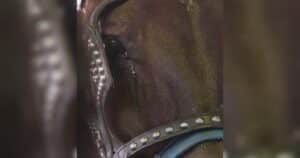


The streets of New York City never stop. Amidst the chaos of honking taxis and rushing crowds, tourist carriage rides are a familiar sight. But one summer day brought a horrifying pause to that bustling routine — a moment when the hidden suffering of a gentle giant named Ryder was exposed in the most heartbreaking way.
Ryder, a carriage horse known for his patience and strength, collapsed on the scalding pavement while trying to pull a carriage under the overpowering sun. His legs quivered, his body gave in, and he crumpled to the ground, motionless. His handler responded not with care, but with cruelty — shouting and striking Ryder in a desperate attempt to force him back to work.

Onlookers watched in distress as mounted police rushed to the scene. They poured cool water on Ryder and packed his body with ice, trying to prevent heatstroke from claiming his life. The moment, caught on video, traveled around the world — and Ryder’s suffering brought long-ignored truths to light.
In contrast to the illusion of a nostalgic ride through Central Park, the reality of the carriage horse industry is harsh and alarming. These horses don’t trot back to green fields at the end of the day. Instead, they trudge through one of the busiest cities in the world, then return to cramped stables, surrounded by concrete and the roar of engines.

“They never touch grass,” said Edita, Executive Director of the organization NYCLASS. “After hours of relentless labor, these horses have to push through the worst of Midtown traffic to reach their stables. Their lives are filled with noise, concrete, and exhaustion.”
Ryder’s collapse brought undeniable visibility to the cruelty cloaked beneath a popular tourist attraction. For too long, worn-out horses endured long shifts, dangerous temperatures, and limited care. Ryder’s body could no longer tolerate it — and the world witnessed the aftermath.
Out of one horse’s suffering came a call to action: Ryder’s story soon became the face of a proposed law intended to ensure no carriage horse would again suffer such a fate. “Ryder’s Law” seeks to implement accountability, safety protocols, and welfare standards:
- Mandatory health inspections by independent veterinarians
- Temperature and workload restrictions to prevent dangerous overworking
- Permanent retirement for unfit or elderly horses
- Ban of horse-drawn carriages during extreme weather conditions
Supporters of this legislation say Ryder’s pain should not be forgotten. His tragedy ignited urgency for reform, inspiring compassion and a broader conversation about animal welfare in urban environments. While the city pressed on, Ryder had unintentionally forged a powerful legacy.

“We cannot change what happened to Ryder,” Edita said, “but we can make sure his suffering was not in vain.”
Though he fell on the pavement of one of the world’s busiest cities, Ryder’s story rose beyond the streets of Manhattan. For countless people, he became more than a horse — he became a symbol of awakening, a voice for the voiceless, and the beginning of change that hopes to ensure no animal suffers in silence again.




Facebook Comments