
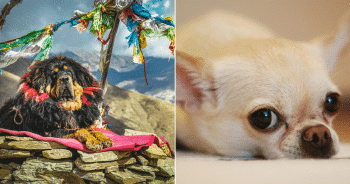

Dog Breeds With Strongest Wolf DNA Revealed in New Study
When most people look at modern dog breeds, especially the small, cuddly types, they seldom think of wolves. However, recent research reveals that our domesticated companions may carry more ancestral ties to wild wolves than previously believed. A groundbreaking genetic study has shown that nearly two-thirds of dog breeds today possess traceable wolf DNA—some more than others.

Surprisingly, this wolf ancestry doesn’t merely date back to the original domestication of dogs, which occurred about 20,000 years ago. Instead, the study suggests that more recent interbreeding between wolves and semi-domesticated or free-roaming dogs also contributed to the wolf-like genes we see today. These interactions occurred within the last several thousand years and appear to have subtly influenced certain traits within breeds.
According to researchers, these connections didn’t stem from wolves interacting directly with household pets. Instead, the wolf DNA likely entered the canine gene pool through rare but notable encounters between wolves and village dogs or strays who lived closer to natural habitats and often roamed freely near human rural communities.

To identify these genetic links, scientists analyzed thousands of DNA samples available through global databases. They discovered that over 64% of modern breeds include measurable amounts of wolf ancestry. While the levels vary, even tiny breeds such as Chihuahuas were found to carry small traces.
Breeds with the highest wolf DNA include:
- Czechoslovakian Wolfdog – up to 40% wolf ancestry
- Saarloos Wolfdog – close to 40% wolf lineage
- Saluki – one of the most ancient breeds, shows significant connection
- Afghan Hound – another ancient breed with higher than average wolf DNA
- Grand Anglo-Français Tricolore – carries around 5%
One of the most fascinating findings involved village dogs, a category of canines that live in and around human settlements but are not owned or bred for work. The study found that 100% of village dogs carry wolf DNA, a sign of ongoing biological exchange. These dogs may act as a bridge between wild wolves and domesticated breeds, especially as habitat changes bring wildlife closer to human spaces.

The study also linked wolf DNA to certain physical and behavioral characteristics in modern dogs. While not universal, many breeds with relatively higher wolf ancestry were found to be larger in build. Interestingly, Saint Bernards—despite their massive size—had no detectable wolf DNA, challenging assumptions that size is directly correlated to ancestry.
Behaviorally, breeds with more wolf DNA were sometimes seen as more independent or less inclined toward human affection. Dogs with less wolf ancestry were more frequently described as sociable, cooperative, and easier to train. However, researchers warn not to draw broad conclusions. Genetics alone can’t predict behavior; upbringing, environment, and training are far more influential on a dog’s temperament.
Another important revelation was the discovery of specific genes likely inherited from wolves which helped dogs adapt to challenging conditions. One such gene, common in Tibetan breeds, is linked to high-altitude adaptation. Tibetan wolves also carry this gene, suggesting interbreeding assisted these dogs in surviving harsh mountainous climates.

This research, published in the Proceedings of the National Academy of Sciences, provides a deeper understanding of dog evolution and how their lineage continues to carry subtle marks of their wild ancestry. While most dog owners won’t see signs of a wolf lurking beneath the surface of their Golden Retriever or Pug, genetically, the past still echoes.



Facebook Comments