

Rescuing Frozen Iguanas: How One Woman Braved the Cold Snap
When a sudden cold spell swept across Florida, Kayla ventured into her backyard, bracing for nothing more significant than the chilly morning air. What she encountered, however, was a poignant scene — two iguanas lying on the grass, motionless. The larger one appeared robust, while its companion was considerably smaller and more delicate. At first sight, their pale and rigid bodies seemed lifeless, victims of the unexpected freeze. But as Kayla stood there, she held onto a glimmer of hope that these creatures were not beyond salvation.
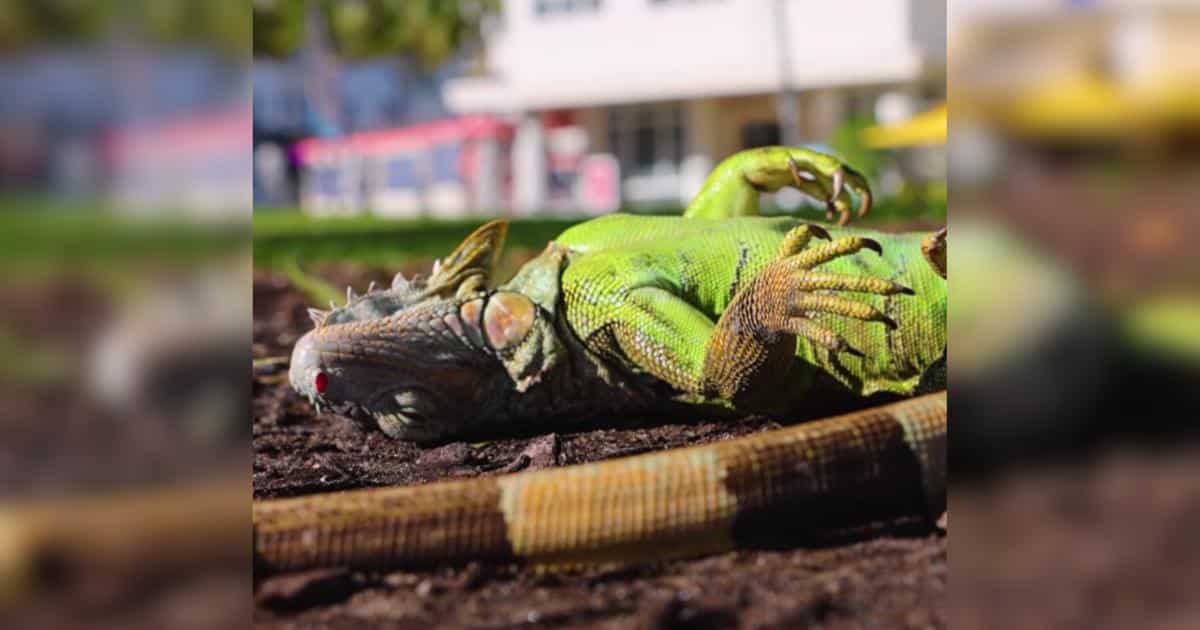
The abrupt drop in temperature that gripped Florida was especially harsh for reptiles, whose survival depends on warmth. Such creatures often enter a state known as torpor in response to extreme cold, slowing their bodily functions to a near standstill and rendering them immobile, giving the impression of death. Despite her initial despair, Kayla recognized that there was still a window of opportunity.
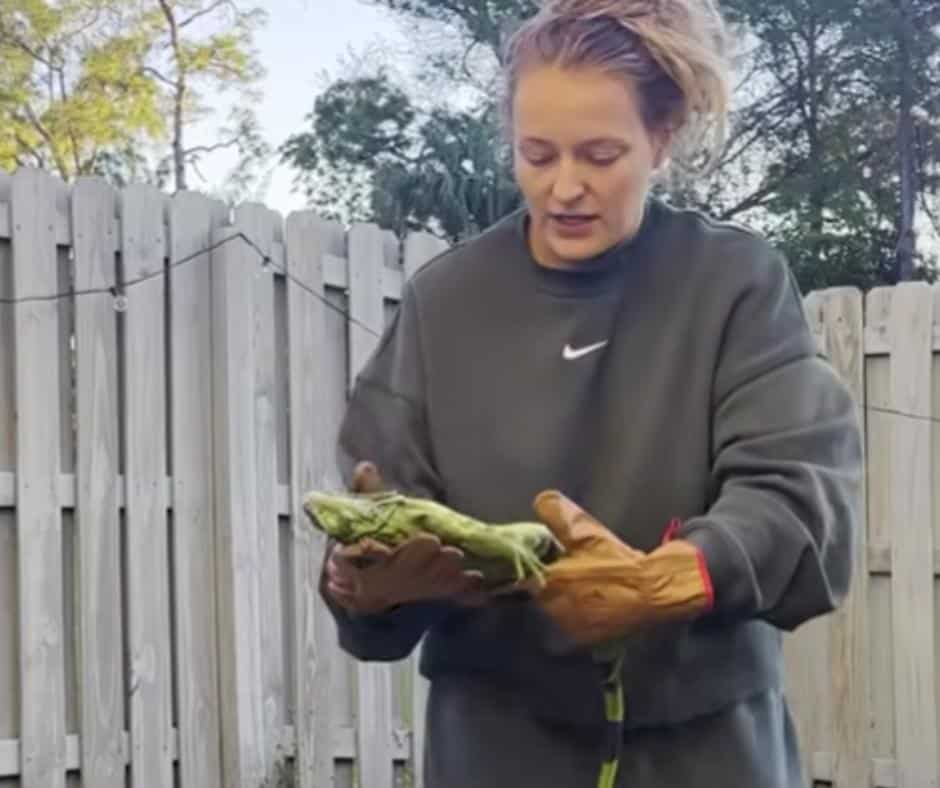
Though Florida’s policy discourages interference with iguanas due to their status as an invasive species, Kayla couldn’t turn away from the unfolding scene. To her, they were not just part of a wider ecological debate; they were living beings caught in circumstances they could not control. Ignoring guidelines, she gently gathered the iguanas, placing them in a box previously used to shelter stray cats from the cold. She lined the box with care and covered it with a towel, a makeshift refuge from the biting wind.
Hours passed as Kayla waited, hopeful yet prepared for the worst. Eventually, she noticed a shift. The larger iguana’s sides began to rise and fall with tentative breaths. Soon, the smaller iguana showed signs of revival too. Their limbs loosened, and the little one reopened its eyes, seemingly disoriented by the swift change from cold paralysis to cautious vitality.
The conversation around iguanas in Florida is often centered on elimination due to their non-native status. Yet, Kayla perceives them differently. Recognizing the legitimate ecological concerns, she believes in extending compassion regardless. It’s a complex situation; humans initially introduced iguanas through the pet trade, and they adapted to the landscape shaped by people.
Acknowledging our part in their journey, Kayla advocates for humane population management methods. Strategies such as removing eggs from nests, modifying landscaping, and utilizing barriers can help manage and reduce conflict without resorting to lethal measures. These solutions emphasize coexistence and balance.
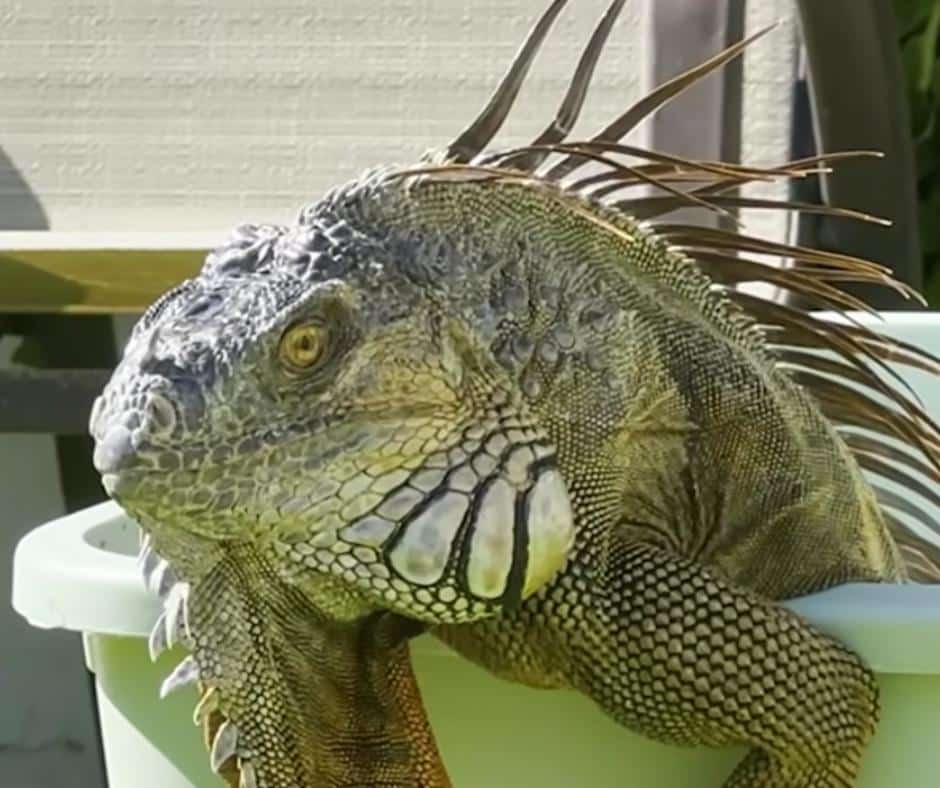
Witnessing the iguanas’ gradual recovery reinforced Kayla’s belief in kindness as an inclusive, non-selective practice. By the next day, the larger iguana managed to climb to the rooftop, basking under the returning sun. The smaller one continued its recuperation in solitude, hinting at resilience and newfound strength.
For Kayla, this encounter was more than a rescue mission; it was a silent reaffirmation that compassion extends beyond convenience, challenging conventions and perspectives. The Florida cold spell may have passed, but its impact, echoed through the survival of two small creatures, left an indelible mark. Through her actions, Kayla demonstrated that even amidst policy and popular opinion, empathy endures, creating ripples of hope in unexpected places.


Facebook Comments