
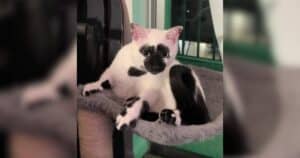

Reverse Tuxedo Cats: Unique Genetics and Mickey’s Fascinating Look
The reverse tuxedo cat is a fascinating variation on the classic tuxedo cat pattern. Unlike the typical tuxedo, which features a predominantly black coat with white accents, a reverse tuxedo is mostly white with black patches concentrated on specific areas. This intriguing coat pattern is a result of the genetic influence of the KIT gene’s white-spotting effect.
Understanding the Genetics Behind the Pattern
The black-and-white markings seen in both standard and reverse tuxedo cats result from the influence of the KIT gene, which controls how pigment-producing cells spread across a kitten’s body before birth. In a standard tuxedo cat, these cells migrate further, leaving more black surface area with white spots on the paws, chest, and belly. In reverse tuxedo cats, the migration halts earlier, pushing black pigment into a smaller area and predominantly covering the cat in white.
Exploring the Pattern Spectrum
Reverse tuxedo cats are just one point on a sliding scale of black-and-white patterns demonstrated in the table below:
| Pattern Name | Black vs. White Balance | Typical Markings | Underlying Mechanism |
|---|---|---|---|
| Standard Tuxedo | Mostly Black | Black coat with white bib, paws, and belly | Moderate white-spotting (KIT gene) migration |
| Reverse (Inverted) Tuxedo | Mostly White | White coat with black cap, mask, and back patches | Limited white-spotting migration; pigment cells cover less territory |
| Van Pattern | Near-total White | Color confined to the head and tail only; body almost entirely white | Extreme white-spotting migration |
| Bicolor/Piebald (General) | Varies | Patchy black-and-white or color-and-white combination | Variable expression of KIT gene across the spectrum |
Meet Mickey: The Reverse Tuxedo Cat
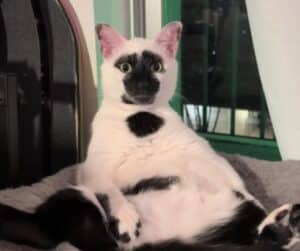
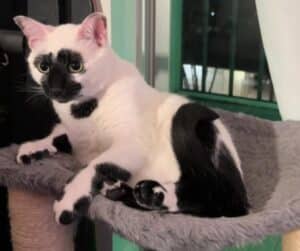
The fascination with reverse tuxedo patterns is evident in the case of Mickey, a particularly striking example of this genetic marvel. Mickey became an internet sensation due to his distinctive white coat, adorned with bold black patches and a dramatic mask marking across his eyes, nose, and mouth. During an ordinary day, Mickey was captured on video as he froze mid-groom, with his eyes wide open and ears pricked in wonder.
Comparisons and Popularity
Mickey’s vivid reverse tuxedo markings prompted playful comparisons to lemurs and other wild animals, further enhancing his charm. Social media users were quick to joke that Mickey’s unique pattern flipped the black-and-white palette and added a touch of dramatic flair, likening it to theatrical eyeliner.
Misconceptions Regarding Reverse Tuxedo Cat Personality
Despite the discussions surrounding the reverse tuxedo cat’s aesthetic, there is no evidence linking this specific pattern to any particular personality traits. The KIT gene responsible for these markings does not influence a cat’s demeanor. As such, perceptions of reverse tuxedo cats as “bold” or “dramatic” likely stem from their distinctive appearance rather than genetic determinants.
Conclusion
Reverse tuxedo cats, like Mickey, showcase the beauty and diversity of feline genetics. While not a breed in itself, the reverse tuxedo pattern continues to captivate cat enthusiasts with its unique blend of color and charm. These elegant felines, though rare, remind us of the intricate and awe-inspiring nature of genetics in the animal kingdom.
@mickeyginocats Heard a noise mid-groom Literally Meow – Trendify




Facebook Comments