
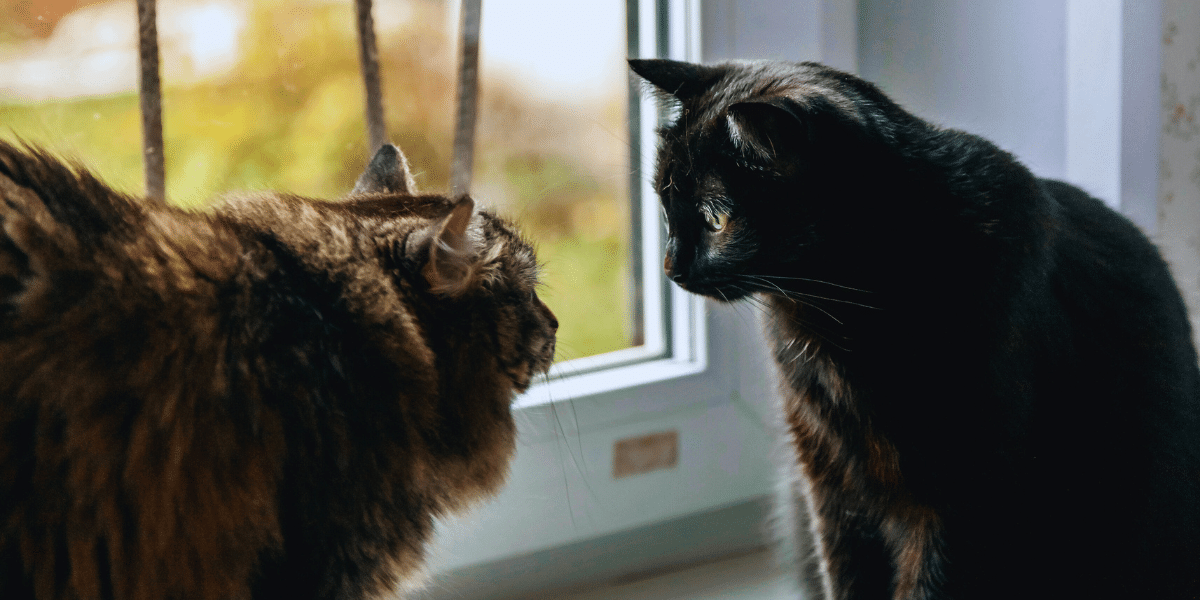

Understanding Feline Language: How Cats Communicate With Each Other
As their owners, we are well-versed in the ways of the meow. We know that our feline friends use their meows to communicate with us. We can decipher which meows they use for what, and we love the cute and funny sounds they make. Additionally, we understand that their ears, tail, and pupils reveal a great deal about what they’re thinking and feeling. But how do cats communicate with each other? There are several interesting methods they employ that differ significantly from their interaction with humans.
The smell is strong with this one.
Cats boast an incredible sense of smell, which is fundamentally important for how they navigate their world. You might have seen your cat make a funny face with a partially opened mouth—this is known as the flehmen response. This unique behavior allows cats to analyze smells in greater detail, helping them interpret pheromones.
Pheromones are chemical signals emitted by animals to send biological messages. This is especially crucial for territorial cats. If you have multiple cats, you may have noticed that they exhibit territorial behavior and may even engage in fights over scents left by one another. Cats have scent glands in various parts of their bodies, including:
– Around the mouth
– Chin
– Forehead
– Cheeks
– Lower back
– Tail
– Paws
When cats rub against furniture or their humans, they are effectively marking their territory with their scent, letting other cats know they have been there.
Body language is real talk.
Observing a cat’s movement can often tell you a lot about its intentions. For inter-cat greetings, you may notice that they will often present their rear ends as a display of friendliness. While this behavior may seem odd to us, it is completely normal for our feline friends.
Additionally, a cat’s ears and tail serve as important indicators of their mood. A low tail with ears flattened against their head can signify stress or aggression, while a perky tail and upright ears indicate a cat’s curiosity or willingness to engage. Cats may also greet each other by sniffing noses, allowing them to gather important information about one another.
Growl, yowl, and hiss, city
Interestingly, mature cats communicate vocally with each other using sounds such as growls, yowls, and hisses. While you might think meows are a significant form of communication, adult cats reserve those primarily for humans.
– **Growls** are utilized as a warning sign when a cat is displeased with the presence of another cat.
– **Yowls** can be used in several situations, such as a female cat in heat or when a cat is stressed or in pain.
– **Hissing** often occurs when a cat is startled or feels threatened. It’s essential to respect this signal and give them the space they need.
Here’s a quick recap of feline vocalization in inter-cat communication:
– Meows are reserved for humans.
– Growls signal displeasure or warning.
– Yowls may indicate distress or a mating call.
– Hissing is a defense mechanism.
In conclusion, understanding how cats communicate with each other provides valuable insights into their behavior and emotional states. Recognizing the non-verbal cues, scents, and sounds contributes not only to better care but also to a deeper bond with your feline companions.

Understanding these elements of feline language can help cat owners foster better interactions, ensuring a more harmonious living environment for their pets.




Facebook Comments